
UNITED NATIONS SPACE COMMAND
TASK FORCE 117 — HELLBORN DIVISION
OFFICIAL MILITARY CODE OF CONDUCT
━━━━━━━━━━━━━━━━━━━━━━━━━━
Document Designation: UNSC-TF117-COC-001
Version: 1.0
Classification: General Military Regulations
Issuing Authority: Task Force Headquarters
Enforcement Authority: Task Force Command
Applicability: All Personnel
Status: Pending Command Ratification
Motto: Through Hell, Unto Victory.
━━━━━━━━━━━━━━━━━━━━━━━━━━
SECTION I — GENERAL PROVISIONS
ARTICLE 01 | PURPOSE OF THE CODE OF CONDUCT
The United Nations Space Command Task Force 117 Code of Conduct establishes the official standards of military professionalism, discipline, integrity, accountability, leadership and operational conduct expected from every member of the Hellborn Division.
Membership within Task Force 117 is a privilege, not an entitlement. Every individual who joins this organization voluntarily agrees to uphold its regulations, respect its personnel, follow its authorized leadership and contribute to maintaining a professional, welcoming and immersive military simulation environment.
The purpose of this Code of Conduct is to ensure that Task Force 117 operates as a disciplined and unified organization where every member is treated fairly, every leader is held accountable and every operation is conducted with professionalism.
Military rank, operational experience, specialized qualifications, seniority and personal relationships shall never exempt an individual from these regulations.
ARTICLE 02 | JURISDICTION AND APPLICABILITY
This Code of Conduct applies to all personnel assigned to:
-
Task Force Headquarters — HELLBORN
-
1st Spartan Operations Group — TITAN
-
2nd ODST Battalion — FALLEN ANGELS
-
3rd Aviation Squadron — VALKYRIE
-
4th Intelligence Division — PHANTOM
-
5th Armored Support Battalion — JUGGERNAUT
-
Basic Combat Training Company — FORGE
-
Officer Candidate School — SENTINEL
-
Active Duty Personnel
-
Reserve Personnel
-
Recruits and Candidates
-
Attached and Allied Personnel
-
Authorized Administrative Personnel
These regulations apply during official operations, training sessions, public events, private operations, meetings, Discord communications and activities where individuals officially represent Task Force 117.
Private activities unrelated to the organization are outside military command jurisdiction unless they involve credible threats, harassment of members or other serious violations affecting community safety.
ARTICLE 03 | AUTHORITY OF TASK FORCE COMMAND
The Task Force Commanding Officer, holding the rank of Colonel (O-6), serves as the highest military command authority within the Hellborn Division.
The Task Force Executive Officer assists with organizational management, operational readiness and command supervision. The Task Force Sergeant Major serves as the principal senior enlisted advisor and assists in maintaining discipline, professionalism and enlisted standards.
All subordinate leadership personnel exercise authority within their assigned responsibilities and established chain of command.
No individual may independently establish regulations that contradict this Code of Conduct or exceed their authorized command responsibilities.
Discord moderation and server administration authority remain separate from fictional military rank.
━━━━━━━━━━━━━━━━━━━━━━━━━━
SECTION II — CORE VALUES AND MILITARY ETHICS
ARTICLE 04 | THE SEVEN HELLBORN CORE VALUES
1. Honor
Personnel shall conduct themselves with dignity, fairness and respect. Every individual must uphold the reputation of Task Force 117 through their actions, decisions and interactions.
2. Integrity
Personnel shall remain truthful and accountable. Dishonesty, manipulation, falsification of records and deliberate deception of leadership are prohibited.
3. Discipline
Personnel shall demonstrate self-control, professionalism and adherence to established regulations, even when supervisory personnel are not present.
4. Loyalty
Personnel shall demonstrate commitment to their fellow members and the organization without compromising integrity, personal boundaries or community safety.
5. Courage
Personnel shall demonstrate the willingness to accept responsibility, acknowledge mistakes, report misconduct and overcome challenges during authorized gameplay.
6. Brotherhood
Personnel shall support their fellow members regardless of rank, occupation, division, platform or personal background. No member shall deliberately undermine another member's opportunity to succeed.
7. Excellence
Personnel shall continuously strive to improve their knowledge, leadership, teamwork and occupational proficiency.
ARTICLE 05 | PERSONAL ACCOUNTABILITY
Every member shall remain responsible for their own actions, statements and decisions.
Personnel shall not blame subordinate personnel for their own misconduct, conceal mistakes or knowingly provide false information during administrative reviews.
Acknowledging mistakes and demonstrating a willingness to improve shall be considered positively during corrective reviews.
ARTICLE 06 | PROFESSIONAL REPRESENTATION
All personnel representing Task Force 117 shall conduct themselves professionally.
Members shall not engage in behavior intended to damage the organization's reputation, provoke unnecessary conflicts with other communities or misrepresent the organization's official policies.
Personnel may not issue official statements, establish alliances or make commitments on behalf of Task Force 117 without appropriate authorization.
Constructive criticism and good-faith reporting of organizational problems shall not be considered disloyalty.
━━━━━━━━━━━━━━━━━━━━━━━━━━
SECTION III — GENERAL PERSONNEL CONDUCT
ARTICLE 07 | RESPECT TOWARD ALL PERSONNEL
Every member shall treat fellow personnel with dignity and professionalism regardless of military rank, position, qualification or length of service.
The following behaviors are prohibited:
-
Harassment and bullying.
-
Discrimination and hateful conduct.
-
Personal insults and malicious ridicule.
-
Credible threats or intimidation.
-
Public humiliation.
-
Deliberate targeting of individual members.
-
Sexual harassment.
-
Unwanted sexual communications.
-
Retaliation against individuals reporting misconduct.
-
Deliberate attempts to create hostility between divisions.
Respect must be demonstrated by both subordinate and superior personnel.
ARTICLE 08 | MILITARY PROFESSIONALISM
Personnel shall maintain appropriate military professionalism during official activities.
All members are expected to:
-
Follow reasonable and authorized instructions.
-
Maintain appropriate communications discipline.
-
Remain attentive during official briefings.
-
Demonstrate teamwork and cooperation.
-
Arrive prepared for scheduled activities.
-
Use authorized uniforms and equipment.
-
Respect assigned leadership responsibilities.
-
Remain accountable for their assigned duties.
-
Avoid unnecessary arguments during operations.
-
Demonstrate appropriate conduct toward guests and allied personnel.
ARTICLE 09 | DISCRIMINATION AND HARASSMENT
Task Force 117 prohibits discrimination, harassment and targeted hostility based on race, ethnicity, nationality, religion, disability, gender, sexual orientation or other personal characteristics.
Discriminatory language, slurs and targeted harassment are prohibited in official community spaces.
Claiming that misconduct was intended as a joke, military roleplay or entertainment shall not automatically excuse the behavior.
Serious violations may result in immediate protective restrictions and permanent removal following administrative review.
ARTICLE 10 | HAZING AND ABUSE
Hazing, abusive initiation practices and degrading treatment of recruits or subordinate personnel are prohibited.
No member shall be required to:
-
Perform humiliating or degrading acts.
-
Reveal private personal information.
-
Participate in unwanted sexual discussions.
-
Spend money to obtain military recognition.
-
Endure targeted verbal abuse.
-
Participate in unsafe real-world activities.
-
Ignore real-life responsibilities.
-
Remain in an activity against their wishes.
Military simulation discipline must remain reasonable, fictional and appropriate to the gaming environment.
ARTICLE 11 | CONFLICT RESOLUTION
Personnel experiencing disagreements shall attempt to resolve them professionally.
Disputes should be addressed privately and through appropriate leadership channels whenever practical.
Public arguments, retaliatory actions, coordinated harassment and unnecessary disruption of official activities are prohibited.
Members may request assistance from command personnel or community moderators when disagreements cannot be resolved appropriately.
━━━━━━━━━━━━━━━━━━━━━━━━━━
SECTION IV — CHAIN OF COMMAND
ARTICLE 12 | OFFICIAL CHAIN OF COMMAND
Personnel shall utilize the established chain of command for routine military requests, operational concerns, transfer requests, recommendations and administrative matters.
Task Force Command
-
Task Force Commanding Officer — Colonel
-
Task Force Executive Officer — Lieutenant Colonel
-
Task Force Headquarters Staff
Operational Division Command
-
Operational Division Commander
-
Operational Division Executive Officer
-
Company, Flight or Specialized Group Commander
-
Company, Flight or Specialized Group Executive Officer
-
Platoon Commander or Equivalent Section Leader
-
Platoon Sergeant or Equivalent Senior Enlisted Leader
-
Squad Leader
-
Fireteam Leader
-
Assigned Personnel
-
Recruits and Candidates
The Task Force Sergeant Major and subordinate senior enlisted advisors operate alongside their respective command echelons to advise leadership, supervise enlisted standards and address personnel concerns.
Specialized divisions shall utilize their authorized equivalent leadership structure.
ARTICLE 13 | UTILIZATION OF THE CHAIN OF COMMAND
Personnel shall normally bring routine requests and concerns to their immediate supervisor before approaching higher command.
Immediate supervisors are responsible for addressing matters within their authority and forwarding unresolved matters to the appropriate leadership personnel.
Leadership shall not deliberately obstruct, conceal or ignore legitimate requests.
Personnel may bypass the chain of command when reporting:
-
Harassment or discrimination.
-
Abuse of authority.
-
Credible threats.
-
Serious misconduct.
-
Retaliation.
-
Conflicts involving their immediate supervisor.
-
Urgent community safety concerns.
Such reports may be submitted directly to Task Force Command or authorized community administrators.
ARTICLE 14 | LAWFUL AND AUTHORIZED ORDERS
Within the MilSim, personnel are expected to follow reasonable orders issued by authorized leadership personnel.
An authorized order must:
-
Relate to legitimate organizational or in-game responsibilities.
-
Fall within the issuing individual's authority.
-
Comply with community regulations.
-
Remain appropriate for a voluntary gaming environment.
-
Respect the personal safety and boundaries of the recipient.
Personnel may refuse instructions that violate community regulations, platform rules, personal safety or applicable law.
No individual shall be disciplined solely for refusing an abusive, inappropriate or unauthorized instruction.
ARTICLE 15 | INSUBORDINATION
Insubordination occurs when personnel deliberately refuse a reasonable and authorized instruction without legitimate justification.
Examples include:
-
Repeatedly ignoring operational instructions.
-
Deliberately undermining assigned leadership.
-
Refusing assigned in-game responsibilities without explanation.
-
Encouraging personnel to sabotage authorized activities.
-
Disrupting official briefings through deliberate misconduct.
Respectfully questioning an instruction, requesting clarification or reporting misconduct does not automatically constitute insubordination.
ARTICLE 16 | ABUSE OF COMMAND AUTHORITY
Leadership personnel shall not use military rank or administrative access for personal gain, intimidation, harassment or retaliation.
Prohibited actions include:
-
Issuing malicious disciplinary actions.
-
Threatening members with demotion for personal reasons.
-
Promoting friends without meeting requirements.
-
Awarding unauthorized merit points.
-
Demanding personal favors.
-
Concealing misconduct committed by senior personnel.
-
Misusing administrative permissions.
-
Issuing orders outside assigned authority.
-
Preventing personnel from reporting legitimate concerns.
Confirmed abuse of authority may result in suspension, removal from leadership, demotion or discharge.
━━━━━━━━━━━━━━━━━━━━━━━━━━
SECTION V — MILITARY RANKS AND RESPONSIBILITIES
ARTICLE 17 | MILITARY RANK INTEGRITY
Military ranks are official organizational appointments and shall only be awarded through authorized promotion procedures.
Personnel shall not:
-
Impersonate higher-ranking personnel.
-
Display unearned military ranks.
-
Assign themselves unauthorized positions.
-
Falsify promotion records.
-
Claim qualifications they have not earned.
-
Misrepresent their command authority.
Spartan, ODST and intelligence qualifications do not automatically grant authority over personnel of a higher authorized command position.
ARTICLE 18 | COMMISSIONED OFFICER RESPONSIBILITIES
Commissioned officers are responsible for maintaining organizational effectiveness, operational readiness, accountability and professional leadership.
All commissioned officers shall:
-
Lead by example.
-
Maintain accurate personnel records.
-
Enforce regulations consistently.
-
Protect subordinate personnel from abuse.
-
Supervise authorized military activities.
-
Develop future leadership personnel.
-
Ensure appropriate operational preparation.
-
Maintain communication with superior command.
-
Avoid conflicts of interest.
-
Accept responsibility for their leadership decisions.
Commissioned officers shall not consider themselves exempt from disciplinary review because of their rank.
ARTICLE 19 | WARRANT OFFICER RESPONSIBILITIES
Warrant officers serve as specialized technical experts within Task Force 117.
Their responsibilities include:
-
Maintaining technical proficiency.
-
Advising command personnel.
-
Supervising authorized specialist activities.
-
Supporting technical education.
-
Maintaining equipment standards.
-
Conducting authorized qualification evaluations.
-
Developing personnel within their assigned expertise.
Warrant officer authority shall remain consistent with assigned appointments and operational responsibilities.
ARTICLE 20 | NONCOMMISSIONED OFFICER RESPONSIBILITIES
Noncommissioned officers serve as the foundation of enlisted leadership and discipline.
All NCOs shall:
-
Supervise and mentor subordinate personnel.
-
Maintain personnel accountability.
-
Communicate authorized leadership instructions.
-
Assist with training and development.
-
Correct misconduct professionally.
-
Maintain equipment and qualification standards.
-
Report legitimate concerns to command.
-
Recommend deserving personnel for recognition.
-
Prevent abusive treatment of junior enlisted members.
NCOs are expected to correct deficiencies through constructive instruction rather than humiliation.
ARTICLE 21 | JUNIOR ENLISTED RESPONSIBILITIES
Junior enlisted personnel shall:
-
Participate in required qualification programs.
-
Follow assigned leadership instructions.
-
Maintain professional conduct.
-
Demonstrate teamwork.
-
Maintain proficiency in their assigned MOS.
-
Communicate legitimate concerns.
-
Respect fellow personnel.
-
Accept constructive feedback.
-
Maintain accountability during official activities.
Junior enlisted personnel retain the same protections against harassment and abuse as senior leadership.
━━━━━━━━━━━━━━━━━━━━━━━━━━
SECTION VI — OPERATIONAL CONDUCT
ARTICLE 22 | OPERATIONAL READINESS
Personnel participating in official operations shall arrive appropriately prepared.
Before deployment, members shall:
-
Ensure required modifications are installed.
-
Verify microphone and communications functionality.
-
Report to their assigned leadership.
-
Wear authorized uniforms and equipment.
-
Attend required mission briefings.
-
Confirm their assigned occupation.
-
Understand the applicable gameplay objectives.
-
Notify leadership of technical limitations.
Personnel experiencing technical difficulties shall communicate those issues as soon as reasonably possible.
ARTICLE 23 | MISSION BRIEFING CONDUCT
During mission briefings, personnel shall remain attentive and avoid unnecessary interruptions.
Members shall use designated opportunities to ask questions or request clarification.
Leadership personnel shall provide sufficient information concerning mission objectives, assigned responsibilities, scenario-specific restrictions and operational expectations.
Deliberate disruption of official briefings may result in removal from the activity.
ARTICLE 24 | OPERATIONAL DISCIPLINE
During official operations, personnel shall remain with their assigned formation unless authorized to perform independent objectives.
Members shall not deliberately abandon assigned in-game responsibilities, disregard mission objectives or interfere with other formations.
Personnel shall maintain communication with their assigned leadership and report significant changes affecting their gameplay participation.
Operations are cooperative military simulations. Individual statistics shall not take priority over teamwork, mission completion or community enjoyment.
ARTICLE 25 | FRIENDLY FIRE
Intentional friendly fire is strictly prohibited unless expressly authorized as part of a controlled training exercise or roleplay scenario involving consenting participants.
Accidental friendly fire shall be reported promptly and reviewed according to the circumstances.
Deliberate friendly fire, revenge attacks and intentional elimination of friendly personnel may result in immediate removal from the operation and formal disciplinary review.
Accidents shall not automatically be treated as intentional misconduct.
ARTICLE 26 | RULES OF ENGAGEMENT
Personnel shall follow the scenario-specific rules of engagement established by authorized mission leadership.
The following are prohibited:
-
Deliberate attacks against protected friendly players.
-
Unauthorized attacks against designated neutral roleplay characters.
-
Intentional interference with protected mission elements.
-
Spawn camping where prohibited.
-
Sabotage of friendly installations.
-
Unauthorized destruction of friendly equipment.
-
Exploitation of scenario mechanics.
-
Unsanctioned player-versus-player engagements.
These regulations apply exclusively to fictional gameplay within the authorized military simulation.
ARTICLE 27 | UNAUTHORIZED EQUIPMENT AND LOADOUTS
Personnel shall utilize equipment appropriate to their assigned division, MOS and qualifications.
The following require appropriate authorization:
-
Spartan armor and specialized equipment.
-
ODST armor and restricted loadouts.
-
ONI-associated equipment.
-
Specialized weapons.
-
Heavy weapons systems.
-
Armored vehicles.
-
Aircraft.
-
Game Master tools.
-
Administrative equipment.
Possessing access to equipment within the game does not automatically authorize its use during official operations.
ARTICLE 28 | VEHICLE AND AIRCRAFT ACCOUNTABILITY
Personnel shall not operate restricted vehicles or aircraft without appropriate qualifications or mission authorization.
Intentional destruction, abandonment, misuse or theft of assigned vehicles is prohibited.
Personnel responsible for vehicles must communicate significant damage, equipment shortages and technical issues to appropriate leadership.
Accidental vehicle loss during legitimate gameplay shall be reviewed fairly and shall not automatically result in disciplinary action.
ARTICLE 29 | MEDICAL AND CASUALTY ROLEPLAY
Personnel shall respect the approved in-game medical mechanics and casualty procedures used during official activities.
Members shall not deliberately falsify injuries, stage casualties or exploit medical mechanics to obtain awards, merit points or recognition.
Medical personnel shall provide appropriate assistance within the limitations of the game's mechanics and assigned mission objectives.
No fictional medical qualification represents real-world medical certification.
ARTICLE 30 | OPERATIONAL WITHDRAWAL
Personnel requiring departure from an official operation should notify their immediate leadership when reasonably possible.
Intentionally abandoning an operation to disrupt mission success may result in administrative review.
However, real-life emergencies, personal wellbeing, family responsibilities, work, school and technical difficulties shall always take priority.
No member shall be required to remain online against their wishes.
ARTICLE 31 | AFTER-ACTION REPORTS
Personnel are encouraged to participate in official operational debriefings.
After-action discussions shall focus on:
-
Mission performance.
-
Communication effectiveness.
-
Teamwork.
-
Organizational improvements.
-
Equipment or technical issues.
-
Leadership effectiveness.
-
Training deficiencies.
-
Exceptional personnel achievements.
After-action reports shall remain professional and must not be used to publicly humiliate individual members.
━━━━━━━━━━━━━━━━━━━━━━━━━━
SECTION VII — DIVISION-SPECIFIC REGULATIONS
ARTICLE 32 | TITAN — SPARTAN OPERATIONS GROUP
Spartan personnel represent an elite specialized qualification within the Hellborn Division and shall maintain exceptionally high standards of professionalism.
Spartan personnel shall:
-
Maintain active Spartan qualifications.
-
Respect the established chain of command.
-
Utilize authorized Spartan equipment.
-
Maintain assigned fireteam accountability.
-
Demonstrate exceptional teamwork.
-
Support conventional UNSC formations.
-
Maintain proficiency through specialized training.
-
Avoid unnecessary interference with subordinate formations.
-
Protect the integrity of Spartan selection.
-
Lead by example during official activities.
Spartan status shall never be treated as permission to disregard orders, abuse authority or demonstrate superiority toward other members.
Unauthorized use of Spartan equipment or impersonation of qualified Spartan personnel is prohibited.
ARTICLE 33 | FALLEN ANGELS — ODST BATTALION
The Fallen Angels Battalion shall maintain professional infantry standards across its three authorized companies.
Alpha Company — ODST Assault Infantry
Personnel shall maintain infantry qualifications, assigned unit accountability and operational readiness.
Bravo Company — ODST Assault Infantry
Personnel shall maintain the same professional assault infantry standards established for Alpha Company.
Charlie Company — Heavy Combat Support
Personnel shall maintain appropriate qualifications for assigned heavy weapons, engineering, medical and support responsibilities.
All Fallen Angels personnel shall:
-
Maintain active ODST qualifications.
-
Respect assigned company leadership.
-
Utilize authorized ODST equipment.
-
Demonstrate disciplined teamwork.
-
Support other operational divisions.
-
Maintain appropriate communications.
-
Follow authorized deployment procedures.
-
Protect the integrity of ODST qualifications.
No ODST personnel shall claim Spartan status without completing the established Spartan selection program.
ARTICLE 34 | VALKYRIE — AVIATION SQUADRON
VALKYRIE personnel are responsible for maintaining professional aviation standards during authorized gameplay.
All aviation personnel shall:
-
Maintain appropriate aircraft qualifications.
-
Follow assigned flight leadership.
-
Utilize designated aviation communications.
-
Respect authorized aircraft assignments.
-
Maintain accountability for passengers and crew.
-
Follow scenario-specific airfield restrictions.
-
Avoid reckless or deliberately disruptive flying.
-
Report aircraft losses and technical issues.
-
Coordinate authorized support with mission leadership.
-
Provide assistance to friendly formations.
Intentional aircraft crashes, unauthorized aircraft use and deliberate abandonment of friendly passengers are prohibited.
ARTICLE 35 | PHANTOM — INTELLIGENCE DIVISION
PHANTOM personnel shall maintain professionalism, discretion and accountability while participating in fictional intelligence activities.
All intelligence personnel shall:
-
Protect authorized fictional mission information.
-
Maintain accurate intelligence reports.
-
Respect established roleplay access restrictions.
-
Avoid falsifying mission intelligence.
-
Utilize authorized in-game intelligence systems.
-
Maintain appropriate communications.
-
Follow Intelligence Command authorization requirements.
-
Respect the privacy of all community members.
Intelligence authority does not permit real-world surveillance, unauthorized account access, doxxing, collection of private information or monitoring of private communications.
Classified roleplay designations shall never prevent members from reporting misconduct to administrators.
ARTICLE 36 | JUGGERNAUT — ARMORED SUPPORT BATTALION
JUGGERNAUT personnel shall maintain appropriate equipment qualifications and demonstrate responsible use of armored and logistical resources.
Personnel assigned to ANVIL, HAMMER, FORTRESS and ATLAS Companies shall:
-
Maintain applicable vehicle and occupational qualifications.
-
Respect assigned vehicle crews.
-
Utilize authorized equipment.
-
Coordinate with supported formations.
-
Maintain accountability for assigned resources.
-
Report significant equipment damage.
-
Avoid unnecessary destruction of friendly assets.
-
Maintain professional logistical support.
-
Follow mission-specific restrictions.
Heavy equipment shall not be utilized to intentionally disrupt friendly gameplay.
━━━━━━━━━━━━━━━━━━━━━━━━━━
SECTION VIII — TRAINING COMMAND REGULATIONS
ARTICLE 37 | FORGE — BASIC COMBAT TRAINING COMPANY
FORGE instructors are responsible for developing disciplined, knowledgeable and qualified personnel.
All instructors shall:
-
Follow the approved BCT curriculum.
-
Conduct training professionally.
-
Evaluate recruits fairly.
-
Maintain accurate training records.
-
Provide clear and understandable instructions.
-
Permit reasonable questions.
-
Assist personnel experiencing technical difficulties.
-
Avoid favoritism.
-
Prohibit hazing and humiliation.
-
Maintain accountability for training candidates.
-
Enforce established graduation requirements.
-
Submit qualification results accurately.
Instructors shall not graduate unqualified recruits or deliberately fail qualified recruits for personal reasons.
ARTICLE 38 | RECRUIT CONDUCT
Recruits participating in Basic Combat Training shall:
-
Respect assigned instructors.
-
Follow reasonable training instructions.
-
Participate in mandatory training phases.
-
Maintain communications discipline.
-
Avoid intentional disruption.
-
Utilize assigned training equipment.
-
Demonstrate teamwork.
-
Complete examinations independently.
-
Report technical difficulties.
-
Accept constructive instructional feedback.
Recruits shall remain eligible to request assistance, clarification, remedial training or administrative review.
ARTICLE 39 | SENTINEL — OFFICER CANDIDATE SCHOOL
Officer Candidate School personnel shall maintain the highest applicable standards of leadership ethics and instructional professionalism.
Instructors shall evaluate candidates according to approved academic, leadership and practical standards.
Officer Candidates shall:
-
Demonstrate integrity.
-
Maintain professional conduct.
-
Respect enrolled candidates and instructors.
-
Complete all required evaluations.
-
Accept constructive criticism.
-
Demonstrate leadership accountability.
-
Maintain accurate administrative records.
-
Avoid abuse of temporary training authority.
-
Respect the limitations of candidate status.
Officer Candidates shall retain their permanent military rank until formally commissioned.
Graduation from Officer Candidate School does not independently authorize promotion unless all established commissioning requirements have been satisfied.
ARTICLE 40 | TRAINING QUALIFICATION INTEGRITY
Personnel shall not falsify, purchase, exchange or transfer military qualifications.
The following are prohibited:
-
Sharing restricted examination answers without authorization.
-
Submitting another individual's work.
-
Falsifying instructor signatures.
-
Recording incomplete training as completed.
-
Issuing qualifications without appropriate authority.
-
Deliberately manipulating evaluation results.
Fraudulent qualifications may be revoked following administrative review.
━━━━━━━━━━━━━━━━━━━━━━━━━━
SECTION IX — COMMUNICATIONS AND DISCORD CONDUCT
ARTICLE 41 | RADIO DISCIPLINE
During official military activities, communications shall remain clear, professional and relevant to the assigned scenario.
Personnel shall not:
-
Intentionally interrupt important transmissions.
-
Spam communications channels.
-
Play unauthorized soundboards or music.
-
Transmit deliberate misinformation.
-
Impersonate command callsigns.
-
Intentionally interfere with operational communications.
-
Utilize communications to harass personnel.
Emergency and mission-critical communications shall receive appropriate priority.
ARTICLE 42 | DISCORD CHANNEL CONDUCT
Personnel shall utilize Discord channels according to their designated purposes.
The following are prohibited:
-
Excessive spam.
-
Unauthorized advertising.
-
Malicious links.
-
Scams and phishing.
-
Mass unsolicited mentions.
-
Harassment.
-
Hate speech.
-
Explicit sexual content.
-
Unapproved distribution of restricted documents.
-
Deliberate interference with moderation activities.
-
Unauthorized impersonation.
All personnel shall comply with Discord's applicable Terms of Service and Community Guidelines.
ARTICLE 43 | VOICE CHANNEL PROFESSIONALISM
During official briefings, meetings and training sessions, personnel shall maintain appropriate voice channel discipline.
Casual conversations and appropriate humor are permitted in designated recreational channels, provided they comply with community regulations.
Members shall respect reasonable requests concerning disruptive background noise, soundboards and interruptions.
ARTICLE 44 | PERSONAL PRIVACY
Personnel shall respect the privacy of fellow community members.
The following are strictly prohibited:
-
Doxxing.
-
Publishing private personal information without permission.
-
Demanding government identification without legitimate necessity.
-
Unauthorized access to member accounts.
-
Distributing private photographs without consent.
-
Threatening to reveal personal information.
-
Real-world stalking.
-
Sharing account credentials.
-
Using personal information to intimidate members.
Administrative records shall contain only information reasonably necessary for community management.
ARTICLE 45 | RECORDING AND CONTENT CREATION
Members may create gameplay content in accordance with applicable platform rules, community regulations and privacy requirements.
Personnel recording official activities should disclose recording where appropriate, especially when voice communications are included.
Restricted command meetings, private disciplinary proceedings and confidential personnel discussions shall not be publicly distributed without appropriate authorization and consent where required.
Recordings submitted as misconduct evidence shall be handled with appropriate discretion.
ARTICLE 46 | EXTERNAL COMMUNITY RELATIONS
Personnel shall maintain professional conduct when interacting with other Halo, Arma Reforger and military simulation communities.
The following are prohibited:
-
Coordinated harassment of rival communities.
-
Discord raids.
-
Deliberate sabotage of external servers.
-
False accusations against other organizations.
-
Unauthorized representation of Task Force Command.
-
Ban evasion.
-
Unsolicited mass recruitment advertising.
Membership in another gaming community shall not automatically constitute misconduct.
Conflicts involving leadership responsibilities or scheduling should be addressed through administrative discussion.
━━━━━━━━━━━━━━━━━━━━━━━━━━
SECTION X — CHEATING AND GAME INTEGRITY
ARTICLE 47 | ZERO-TOLERANCE CHEATING POLICY
Cheating and deliberate exploitation are prohibited throughout Task Force 117.
Prohibited activities include:
-
Aimbots.
-
Wallhacks.
-
Unauthorized gameplay scripts.
-
Unauthorized advantage-granting modifications.
-
Deliberate duplication exploits.
-
Malicious network interference.
-
Unauthorized administrative access.
-
Exploitation of confirmed game vulnerabilities.
-
Manipulation of recorded gameplay statistics.
-
Deliberate circumvention of server restrictions.
Suspected cheating shall be investigated using available evidence. Confirmed serious cheating may result in permanent community removal.
ARTICLE 48 | GAME MASTER AND ADMINISTRATIVE TOOL ABUSE
Game Masters and administrators shall utilize their permissions exclusively for authorized responsibilities.
Prohibited activities include:
-
Spawning unauthorized equipment for personal advantage.
-
Manipulating gameplay outcomes for favoritism.
-
Unauthorized teleportation.
-
Deliberately eliminating players through administrative tools.
-
Altering personnel statistics dishonestly.
-
Interfering with approved training evaluations.
-
Misusing moderation permissions.
-
Destroying or falsifying administrative records.
Administrative access may be suspended during investigations involving tool misuse.
ARTICLE 49 | METAGAMING AND ROLEPLAY INTEGRITY
Personnel shall respect the distinction between information available to their fictional character and information obtained outside the authorized scenario.
Deliberate use of unauthorized information to undermine official roleplay objectives is prohibited.
Personnel shall not intentionally manipulate fictional scenarios to obtain an unfair advantage, unauthorized recognition or personal rewards.
━━━━━━━━━━━━━━━━━━━━━━━━━━
SECTION XI — ATTENDANCE AND PERSONNEL ACCOUNTABILITY
ARTICLE 50 | ATTENDANCE EXPECTATIONS
Active-duty personnel are expected to maintain reasonable participation in official operations, training sessions and organizational activities.
Attendance requirements shall be communicated clearly by the appropriate leadership personnel.
Personnel shall notify leadership when they are unavailable for required activities whenever reasonably possible.
Attendance standards shall remain appropriate to a voluntary gaming community.
ARTICLE 51 | LEAVE OF ABSENCE
Personnel requiring extended time away from the organization may submit a Leave of Absence request.
Acceptable reasons include, but are not limited to:
-
Employment responsibilities.
-
Educational responsibilities.
-
Family responsibilities.
-
Personal wellbeing.
-
Vacations.
-
Technical difficulties.
-
Medical circumstances.
-
Other legitimate personal commitments.
Members are not required to disclose sensitive personal details to justify reasonable leave.
Approved leave shall not automatically result in disciplinary action or merit point deductions.
ARTICLE 52 | ABSENCE WITHOUT NOTIFICATION
Personnel who repeatedly miss assigned activities without communication may be contacted by their immediate leadership.
Before punitive action is considered, leadership should establish whether technical difficulties, emergencies or other legitimate circumstances affected the member's participation.
Extended inactivity may result in administrative reassignment or transfer to reserve status.
Inactivity alone is not equivalent to serious misconduct.
ARTICLE 53 | RESERVE PERSONNEL
Reserve personnel remain subject to the Code of Conduct but maintain reduced operational commitments.
Reserve status may be used for members whose real-life responsibilities prevent consistent active-duty participation.
Personnel returning to active duty may be required to complete reasonable refresher training or restore expired qualifications.
ARTICLE 54 | PERSONNEL RECORDS
All personnel records shall accurately reflect:
-
Military rank.
-
Assigned division.
-
Assigned company or specialized team.
-
Primary and secondary MOS.
-
Service history.
-
Training qualifications.
-
Operational participation.
-
Medals and commendations.
-
Merit point transactions.
-
Promotion history.
-
Authorized disciplinary actions.
-
Current personnel status.
Unauthorized alteration or falsification of personnel records is prohibited.
━━━━━━━━━━━━━━━━━━━━━━━━━━
SECTION XII — PROMOTIONS, MEDALS AND MERIT POINTS
ARTICLE 55 | PROMOTION REGULATIONS
Promotions shall be awarded based on merit, qualifications, service history, leadership ability, professionalism, position availability and command authorization.
Personnel shall not receive promotions solely because of:
-
Personal friendships.
-
Financial donations.
-
Seniority alone.
-
Personal popularity.
-
Demands or threats.
-
Unverified accomplishments.
-
Administrative permissions.
-
Specialized equipment ownership.
All personnel must satisfy the established promotion requirements before advancement.
ARTICLE 56 | MERIT POINT INTEGRITY
Merit points represent verified achievements and contributions to Task Force 117.
Personnel shall not:
-
Award merit points to themselves.
-
Fabricate qualifying achievements.
-
Exchange or purchase merit points.
-
Manipulate personnel records.
-
Arrange staged incidents for recognition.
-
Submit duplicate recommendations for the same achievement.
-
Pressure leadership to approve unauthorized awards.
Standard attendance and ordinary occupational duties do not automatically grant merit points.
ARTICLE 57 | MEDALS AND COMMENDATIONS
Military decorations shall be awarded according to the official Hellborn Division Medals and Commendations regulations.
All decorations require appropriate documentation, eligibility verification and authorized approval.
Meeting a merit point threshold alone does not automatically entitle an individual to a medal.
Fraudulently obtained awards may be revoked following formal review.
ARTICLE 58 | FAVORITISM AND CORRUPTION
Leadership personnel shall not grant preferential treatment based on friendships, personal relationships, financial contributions or outside influence.
Promotion boards, award reviews and disciplinary proceedings shall remain impartial.
Individuals with a direct personal conflict of interest shall disclose the conflict and recuse themselves when appropriate.
━━━━━━━━━━━━━━━━━━━━━━━━━━
SECTION XIII — CLASSIFICATION OF OFFENSES
ARTICLE 59 | CLASS I — MINOR INFRACTIONS
Minor infractions involve isolated, low-impact violations that generally require correction rather than severe punishment.
Examples include:
-
Minor communications disruptions.
-
Unintentional uniform violations.
-
Isolated failure to follow routine procedures.
-
Minor disrespectful remarks.
-
Failure to acknowledge routine instructions.
-
Minor channel misuse.
-
Unintentional administrative mistakes.
Authorized Corrective Actions
-
Verbal counseling.
-
Constructive correction.
-
Remedial training.
-
Formal verbal warning.
-
Merit deduction of 1–3 points following authorization.
ARTICLE 60 | CLASS II — MODERATE INFRACTIONS
Moderate infractions involve repeated minor violations or conduct that significantly disrupts organizational activities.
Examples include:
-
Repeated disregard of established procedures.
-
Deliberate communications disruption.
-
Repeated disrespectful conduct.
-
Unauthorized equipment use.
-
Deliberate refusal of reasonable instructions.
-
Repeated minor misconduct.
-
Unauthorized use of restricted roles.
Authorized Corrective Actions
-
Formal written warning.
-
Mandatory remedial training.
-
Temporary restriction from specific duties.
-
Administrative probation.
-
Merit deduction of 3–10 points following authorization.
ARTICLE 61 | CLASS III — SERIOUS INFRACTIONS
Serious infractions involve substantial disruption, deliberate misconduct or significant abuse of organizational responsibilities.
Examples include:
-
Intentional friendly fire.
-
Deliberate operational sabotage.
-
Serious insubordination.
-
Impersonation of leadership personnel.
-
Intentional destruction of friendly equipment.
-
Serious administrative misconduct.
-
Falsification of official records.
-
Abuse of military authority.
-
Deliberate interference with disciplinary investigations.
Authorized Corrective Actions
-
Formal reprimand.
-
Suspension from official activities.
-
Removal from leadership responsibilities.
-
Revocation of related fraudulent qualifications.
-
Administrative demotion.
-
Merit deductions under the official merit penalty schedule.
-
Administrative discharge when warranted.
ARTICLE 62 | CLASS IV — CRITICAL INFRACTIONS
Critical infractions involve severe misconduct or behavior that threatens community safety and integrity.
Examples include:
-
Confirmed serious cheating.
-
Credible real-world threats.
-
Doxxing.
-
Sexual harassment.
-
Predatory behavior.
-
Severe discrimination.
-
Coordinated harassment.
-
Malicious account compromise.
-
Severe abuse of administrative permissions.
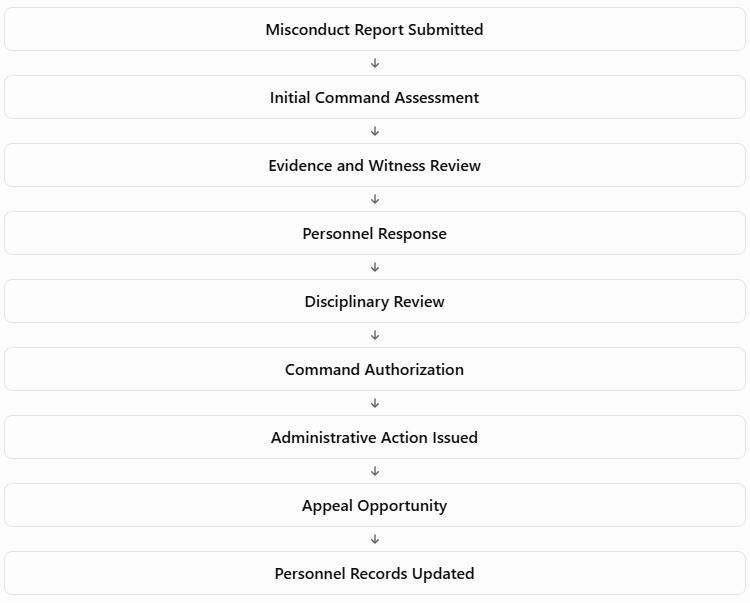
-
Deliberate retaliation against misconduct reporters.
-
Serious violations of platform safety regulations.
Authorized Administrative Actions
-
Immediate protective suspension.
-
Temporary removal of administrative permissions.
-
Permanent removal from leadership.
-
Formal disciplinary review.
-
Discharge from Task Force 117.
-
Permanent community prohibition.
-
Reporting to appropriate platform safety teams or authorities when warranted.
Emergency protective actions may be implemented before a complete review when necessary to protect personnel.
━━━━━━━━━━━━━━━━━━━━━━━━━━
SECTION XIV — DISCIPLINARY ACTION SYSTEM
ARTICLE 63 | PROGRESSIVE DISCIPLINE
Disciplinary actions should be proportionate to the severity, intent, frequency and consequences of the verified misconduct.
The standard progressive disciplinary system consists of:
Stage 1 — Verbal Counseling
A professional discussion identifying misconduct, expected improvements and applicable regulations.
Stage 2 — Formal Verbal Warning
An officially documented warning concerning continued or more significant misconduct.
Stage 3 — Written Reprimand
A formal written disciplinary action recorded within the individual's personnel file.
Stage 4 — Administrative Probation
A designated period during which the individual's conduct and organizational responsibilities are subject to additional review.
Stage 5 — Suspension
Temporary restriction from official operations, training, leadership duties or community access.
Stage 6 — Demotion or Removal From Position
Formal reduction of military rank or removal from an assigned leadership appointment when justified.
Stage 7 — Administrative Discharge
Termination of military membership within Task Force 117.
Stage 8 — Permanent Community Removal
Permanent restriction from community platforms and associated services when warranted by serious misconduct.
Serious or critical violations may justify bypassing lower disciplinary stages.
ARTICLE 64 | DISCIPLINARY MERIT POINT DEDUCTIONS
ViolationAuthorized DeductionMinor misconduct1–3 MPRepeated minor misconduct3–5 MPFormal written reprimand5–10 MPRepeated procedural violations5–10 MPDeliberate operational disruption10–25 MPIntentional equipment misuse10–25 MPIntentional friendly fire15–30 MPSerious insubordination15–30 MPAbuse of military authority25–50 MPFalsification of personnel records25–75 MPFalsification of award recommendations25–75 MPSerious harassment or discrimination25–100 MPCheating or deliberate exploitation50–100 MPMajor community regulation violation50–100 MPAdministrative demotionUp to 50 MPDishonorable dischargeRemaining merit balance forfeited
Merit deductions must follow the official merit point regulations.
Multiple deductions shall not be arbitrarily combined for the same incident. Individual merit balances shall not fall below zero.
Merit deductions shall not be issued for legitimate absences, technical difficulties, reasonable mistakes or real-life emergencies.
ARTICLE 65 | ADMINISTRATIVE PROBATION
Personnel placed on probation may receive temporary restrictions concerning leadership, promotions, awards, transfers or specialized assignments.
Recommended Probation Periods
-
Minor repeated violations: 7 days.
-
Moderate violations: 14 days.
-
Serious violations: 30 days.
-
Exceptional circumstances: Up to 60 days with Headquarters approval.
Probation orders must identify the reasons, applicable restrictions, expected improvements and expiration date.
Restrictions shall be removed at the conclusion of probation unless an authorized review establishes legitimate grounds for extension.
ARTICLE 66 | ADMINISTRATIVE SUSPENSION
Suspensions may be issued to protect operational integrity, prevent continued misconduct or facilitate administrative investigation.
Suspension conditions shall be communicated clearly.
A temporary investigative suspension is not automatically a determination of guilt.
Suspensions must be reviewed within a reasonable period and shall not continue indefinitely without documented justification.
ARTICLE 67 | DEMOTION AND REMOVAL FROM COMMAND
Demotions may be authorized following serious misconduct, repeated failure to fulfill leadership responsibilities, fraudulent promotion or substantiated abuse of authority.
Removal from an assigned leadership position does not automatically require a reduction in permanent military rank.
All demotions require appropriate command authorization and formal documentation.
━━━━━━━━━━━━━━━━━━━━━━━━━━
SECTION XV — INVESTIGATIONS AND ADMINISTRATIVE JUSTICE
ARTICLE 68 | RIGHT TO FAIR REVIEW
All personnel accused of misconduct shall receive a reasonable opportunity to respond to allegations before final disciplinary action is determined, except where urgent protective restrictions are necessary.
Individuals shall not be presumed guilty solely because an accusation has been made.
Disciplinary reviews must consider verified evidence, relevant circumstances, intent, consequences and previous confirmed disciplinary history.
ARTICLE 69 | REPORTING MISCONDUCT
Personnel may report misconduct through their immediate leadership, Task Force Headquarters or authorized community administrators.
Reports should include:
-
Name of the personnel involved.
-
Date and approximate time.
-
Location or applicable Discord channel.
-
Description of the alleged misconduct.
-
Relevant regulation.
-
Available screenshots, recordings or other evidence.
-
Potential witnesses.
Reports shall be handled with reasonable discretion.
Good-faith reports that cannot be substantiated shall not automatically result in disciplinary action against the reporting individual.
Deliberately fabricated accusations may be investigated as misconduct.
ARTICLE 70 | INVESTIGATIVE PROCEDURES
Authorized investigators shall:
-
Receive and document the allegation.
-
Determine whether protective restrictions are necessary.
-
Preserve relevant evidence.
-
Identify applicable regulations.
-
Obtain relevant witness statements.
-
Provide the accused individual a reasonable opportunity to respond.
-
Evaluate the available evidence impartially.
-
Determine whether the allegation is substantiated.
-
Recommend proportionate administrative action.
-
Submit findings to the appropriate authorization authority.
Investigations shall not utilize intimidation, harassment, unauthorized account access or demands for unrelated private information.
ARTICLE 71 | DISCIPLINARY REVIEW BOARD
The Task Force Disciplinary Review Board shall oversee serious administrative matters requiring formal review.
Standard Board Composition
-
Task Force Commanding Officer — Board President
-
Task Force Executive Officer — Deputy President
-
Task Force Sergeant Major — Senior Enlisted Representative
-
Chief Personnel Officer — Administrative Representative
-
Appropriate Division Commander — Division Representative
Board members with direct personal involvement or conflicts of interest shall recuse themselves and be replaced by impartial authorized personnel.
Where the Task Force Commander is the subject of an allegation, review shall be conducted by impartial senior personnel and community administrators who are not subordinate to the accused for purposes of the investigation.
ARTICLE 72 | DISCIPLINARY AUTHORIZATION
Fireteam and Squad Leadership
May issue reasonable corrective instruction, verbal counseling and recommendations for disciplinary review.
Platoon and Company Leadership
May issue documented warnings, recommend remedial training and request appropriate administrative restrictions within authorized policies.
Operational Division Command
May authorize formal reprimands, recommend merit deductions, implement approved probation and recommend suspension or demotion.
Task Force Headquarters
May authorize significant merit deductions, formal suspensions, demotions, removal from command and military discharges.
Authorized Community Administrators
May implement moderation restrictions, mutes, kicks and bans according to community safety policies, regardless of fictional military rank.
ARTICLE 73 | RIGHT TO APPEAL
Personnel receiving formal disciplinary action may submit an appeal within seven calendar days of notification.
An appeal may be submitted on the grounds of:
-
Insufficient evidence.
-
Incorrect application of regulations.
-
Excessive disciplinary action.
-
Procedural irregularities.
-
Newly available evidence.
-
Conflicts of interest.
-
Administrative errors.
Appeals shall be reviewed by impartial personnel who were not responsible for the original decision whenever possible.
Submitting an appeal shall not constitute insubordination.
ARTICLE 74 | PROTECTION AGAINST RETALIATION
No individual shall retaliate against personnel for submitting a good-faith misconduct report, participating in an investigation, providing evidence or exercising their appeal rights.
Retaliation includes:
-
Unjustified demotion.
-
Threats or intimidation.
-
Removal of earned qualifications.
-
Unauthorized merit deductions.
-
Harassment.
-
Deliberate exclusion from activities.
-
Abuse of administrative permissions.
Substantiated retaliation shall be treated as a serious or critical infraction.
━━━━━━━━━━━━━━━━━━━━━━━━━━
SECTION XVI — DISCHARGE AND SEPARATION
ARTICLE 75 | HONORABLE DISCHARGE
An Honorable Discharge may be awarded to personnel who voluntarily conclude their military service while maintaining satisfactory conduct and good organizational standing.
Honorably discharged personnel may retain authorized veteran recognition and documented earned awards.
ARTICLE 76 | GENERAL DISCHARGE
A General Discharge may be issued to personnel whose service concludes under ordinary administrative circumstances that do not warrant an Honorable or Dishonorable Discharge.
Examples include sustained inactivity, incomplete service obligations or unresolved administrative deficiencies.
ARTICLE 77 | ADMINISTRATIVE SEPARATION
Administrative Separation may be utilized when personnel can no longer fulfill organizational requirements without serious misconduct being established.
This may include prolonged inactivity, changes in availability or inability to maintain assigned responsibilities.
Administrative Separation is not automatically punitive.
ARTICLE 78 | DISCHARGE UNDER OTHER THAN HONORABLE CONDITIONS
This discharge classification may be issued when substantiated repeated or serious misconduct makes continued military membership inappropriate.
Final authorization is required from Task Force Headquarters.
ARTICLE 79 | DISHONORABLE DISCHARGE
Dishonorable Discharge is reserved for severe or repeated misconduct fundamentally incompatible with the standards of Task Force 117.
A Dishonorable Discharge may accompany permanent removal from the community when necessary.
All discharge classifications described herein are fictional MilSim administrative designations and do not represent real-world military discharge status.
ARTICLE 80 | REENLISTMENT
Former personnel may submit a reenlistment request where eligible.
Reenlistment reviews may consider:
-
Previous service history.
-
Discharge classification.
-
Verified disciplinary history.
-
Time since separation.
-
Availability of positions.
-
Previous qualifications.
-
Evidence of improved conduct.
Individuals subject to permanent community prohibitions must receive appropriate administrative approval before any return.
━━━━━━━━━━━━━━━━━━━━━━━━━━
SECTION XVII — COMMUNITY SAFETY AND PERSONAL WELFARE
ARTICLE 81 | REAL LIFE COMES FIRST
Task Force 117 is a voluntary gaming organization.
Employment, education, family, health, personal safety and real-world responsibilities shall always take priority over fictional military commitments.
No military rank grants authority over another individual's real-world activities, finances, relationships, medical decisions or personal responsibilities.
Personnel may leave an activity or the organization at any time.
ARTICLE 82 | FINANCIAL INTEGRITY
Military promotions, qualifications, awards and disciplinary decisions shall not be influenced by financial contributions.
Donations must remain voluntary.
Personnel shall not pressure members into making purchases, transferring money or providing financial information.
Financial scams and unauthorized fundraising conducted in the organization's name are prohibited.
ARTICLE 83 | PROTECTION OF COMMUNITY MEMBERS
All members are responsible for maintaining a safe and respectful environment.
Sexual exploitation, grooming, predatory behavior, inappropriate sexual interactions with minors and credible threats are strictly prohibited.
Community administrators may immediately restrict access when credible safety concerns arise.
Serious safety violations may be reported to the relevant platform safety teams or appropriate authorities.
Internal MilSim investigations shall not obstruct legitimate external reporting.
ARTICLE 84 | FICTIONAL MILITARY AUTHORITY
Task Force 117 is a Halo-inspired Arma Reforger military simulation organization.
Military ranks, decorations, identifications, disciplinary actions and qualifications awarded within the organization are fictional community designations.
Personnel shall not represent fictional UNSC service as genuine military service or claim real-world government or military authority through membership.
No disciplinary procedure within Task Force 117 constitutes an actual military judicial proceeding.
━━━━━━━━━━━━━━━━━━━━━━━━━━
SECTION XVIII — ADMINISTRATIVE FORMS
FORM COC-01 | OFFICIAL MISCONDUCT REPORT
Reporting Personnel:
Discord Username:
Military Rank:
Assigned Division:
Personnel Being Reported:
Date and Time of Incident:
Location of Incident:
Applicable Code of Conduct Article:
Description of Alleged Misconduct:
Supporting Evidence:
Witnesses:
Immediate Actions Taken:
Submitted To:
Date Submitted:
━━━━━━━━━━━━━━━━━━━━━━━━━━
FORM COC-02 | OFFICIAL WRITTEN REPRIMAND
Personnel Name:
UNSC Service Number:
Current Rank:
Assigned Division:
Assigned MOS:
Date of Infraction:
Date of Reprimand:
Violated Article:
Offense Classification:
-
Class I — Minor
-
Class II — Moderate
-
Class III — Serious
-
Class IV — Critical
Description of Verified Misconduct:
Previous Relevant Disciplinary Actions:
Supporting Evidence:
Authorized Corrective Action
-
Verbal Counseling
-
Formal Warning
-
Written Reprimand
-
Remedial Training
-
Merit Point Deduction
-
Administrative Probation
-
Suspension
-
Removal From Position
-
Demotion
-
Discharge Recommendation
Merit Points Deducted:
Previous Merit Balance:
Updated Merit Balance:
Corrective Expectations:
Review Date:
Issuing Authority:
Approving Authority:
Personnel Acknowledgment:
Acknowledgment confirms receipt of the document and does not necessarily constitute agreement with its findings.
━━━━━━━━━━━━━━━━━━━━━━━━━━
FORM COC-03 | DISCIPLINARY APPEAL
Personnel Name:
UNSC Service Number:
Current Rank:
Assigned Division:
Original Disciplinary Action:
Date Issued:
Issuing Authority:
Grounds for Appeal
-
Insufficient Evidence
-
Incorrect Regulation
-
Excessive Disciplinary Action
-
Procedural Error
-
Conflict of Interest
-
Newly Available Evidence
-
Other
Detailed Appeal Statement:
Supporting Documentation:
Requested Resolution:
Date Submitted:
Appeal Review Decision
-
Original Decision Upheld
-
Disciplinary Action Reduced
-
Disciplinary Action Reversed
-
Returned for Additional Investigation
Reviewing Authority:
Final Decision:
Date of Decision:
━━━━━━━━━━━━━━━━━━━━━━━━━━
SECTION XIX — AMENDMENTS AND ENFORCEMENT
ARTICLE 85 | AMENDMENTS TO THE CODE OF CONDUCT
Task Force Headquarters may amend this Code of Conduct when necessary to improve organizational effectiveness, address emerging concerns or maintain community safety.
All significant amendments shall be documented and announced through authorized communication channels.
New disciplinary regulations shall not ordinarily be applied retroactively to conduct that occurred before their publication.
ARTICLE 86 | CONSISTENT ENFORCEMENT
All authorized leadership personnel shall enforce this Code of Conduct consistently and impartially.
Failure to enforce regulations due to favoritism, corruption or deliberate concealment may constitute misconduct.
Rank, status, medals and qualifications shall not provide immunity from administrative review.
ARTICLE 87 | ACCEPTANCE OF REGULATIONS
All personnel shall acknowledge this Code of Conduct upon enlistment and whenever significant amendments require renewed acknowledgment.
Failure to read published regulations does not automatically excuse misconduct, provided the regulations were reasonably accessible and communicated.
Leadership remains responsible for communicating important expectations clearly.
━━━━━━━━━━━━━━━━━━━━━━━━━━
SECTION XX — OFFICIAL PERSONNEL OATH
I solemnly swear to uphold the regulations, values and traditions of the United Nations Space Command and Task Force 117 — Hellborn Division.
I shall conduct myself with honor, integrity, discipline, loyalty, courage, brotherhood and excellence.
I shall respect my fellow personnel regardless of rank, position or operational assignment.
I shall follow the authorized leadership of the Hellborn Division, remain accountable for my actions and never abuse any authority entrusted to me.
I shall uphold the standards of my division, maintain the integrity of my military qualifications and earn my recognition through dedication and honorable service.
I shall stand against corruption, dishonesty, harassment and the abuse of authority.
I shall remember that my rank represents responsibility, my medals represent achievement and my actions represent the organization I serve.
Through adversity, I shall remain determined.
Through hardship, I shall remain united.
Through defeat, I shall rise again.
I am a warrior of Task Force 117.
I am a defender of humanity.
I am Hellborn.
THROUGH HELL, UNTO VICTORY.
━━━━━━━━━━━━━━━━━━━━━━━━━━
OFFICIAL CODE OF CONDUCT ACKNOWLEDGMENT
I hereby acknowledge that I have read, understood and voluntarily agreed to comply with the official Task Force 117 Code of Conduct.
I understand that membership is voluntary and that violations of these regulations may result in authorized administrative actions.
I understand that fictional military authority does not override personal safety, real-world responsibilities, applicable law or community platform regulations.
Personnel Name:
Discord Username:
UNSC Service Number:
Military Rank:
Assigned Division:
Date of Acknowledgment:
Personnel Signature:
Reviewing Officer:
━━━━━━━━━━━━━━━━━━━━━━━━━━
COMMAND RATIFICATION
Task Force Commanding Officer:
Rank: Colonel (O-6)
Task Force Executive Officer:
Rank: Lieutenant Colonel (O-5)
Task Force Sergeant Major:
Rank: Sergeant Major (E-9)
Effective Date:
Document Version: 1.0
━━━━━━━━━━━━━━━━━━━━━━━━━━
ONE COMMAND. ONE BROTHERHOOD. ONE MISSION.
HONOR WITHOUT EXCEPTION.
DISCIPLINE WITHOUT CORRUPTION.
LEADERSHIP WITHOUT ABUSE.
LOYALTY WITHOUT COMPROMISING INTEGRITY.
━━━━━━━━━━━━━━━━━━━━━━━━━━
UNITED NATIONS SPACE COMMAND
TASK FORCE 117 — HELLBORN DIVISION
TITAN — HUMANITY'S SHIELD. HUMANITY'S SWORD.
FALLEN ANGELS — FEET FIRST INTO HELL.
VALKYRIE — DEATH FROM ABOVE. SALVATION FROM THE SKIES.
PHANTOM — UNSEEN. UNHEARD. UNFORGIVING.
JUGGERNAUT — IRON WILL. UNBREAKABLE FORCE.
FORGE — FROM RECRUITS TO WARRIORS.
SENTINEL — EARN YOUR COMMISSION. LEAD WITH HONOR.
━━━━━━━━━━━━━━━━━━━━━━━━━━
FORGED IN HELL.
SENT FROM THE HEAVENS.
BUILT TO WIN.
THROUGH HELL, UNTO VICTORY.
Disciplinary system quick reference
Minor Infraction
Isolated, low-impact misconduct
Counseling, correction or verbal warning
1–3 MP
Moderate Infraction
Repeated or disruptive misconduct
Written warning, remedial training or probation
3–10 MP
Serious Infraction
Severe disruption, insubordination or abuse of authority
Suspension, demotion or removal from position
10–75 MP, depending on offense
Critical Infraction
Severe misconduct or community safety violations
Discharge or permanent community removal
Up to 100 MP or forfeiture